Creativity - 10 Skills To Future Proof Yourself
The world of work is changing fast. How can you avoid getting left behind?
We published a post on 10 skills the World Economic Forum says will be important to stay relevant in the future world of employment.
In this post, we will be focusing on the first of those skills mentioned: creativity.
What is creativity?
In essence, creativity is about taking existing concepts and combining them to produce something new.
It is something that is common to all of us and not something magical possessed by only the few.
For most of us, our creative powers peaked as children. We then became adults, stumbled upon a career and have been trying our hardest to be a grown up ever since. Creativity, unless we became artists, became associated with activities of a frivolous nature.
It was squeezed out of us.
The good news is it’s possible to rediscover your creative ability and use it to improve all aspects of your life.
Why is it important?
Machines aren’t great at thinking this way currently. They are geared towards the logical.
Creativity is behind the most ground breaking ideas ever conceived.
It’s an essential skill in business. Those that fail to innovate by thinking creatively will not survive longterm.
It’s a form of competitive advantage that doesn’t cost anything.
It will help you to become a better problem solver.
How do I get better at it?
Ultimately, creativity is a process. Like any other skill, the more you practice the better you will become.
In 1940, James Webb-Young wrote a book called A Technique for Producing Ideas that is one of the best books explaining this process.
Young identified the following five steps that are common to the production of all ideas:
Step 1 - gather as much new material as possible. This includes specific material (related to the product or task) and general material (from a wide range of topics).
Step 2 - work through the materials in your mind. Mentally “chew” your new material by looking at the facts from different angles and experimenting with fitting ideas together.
Step 3 - put the problem aside and go and do something else that mentally excites you and energises you. That’s right. Relax!
Step 4 - only after you have stopped thinking about it, your idea will come back to you in a flash of insight.
Step 5 - shape and develop your idea into something practical and useful. Put your idea out into the world, submit it to the criticism of others, and adapt it as needed.
Some helpful suggestions
Here are some ways to help you improve the first step in this process:
1. Try writing down 5 new ideas a day. It doesn’t matter how good or bad they are. Get ‘em down.
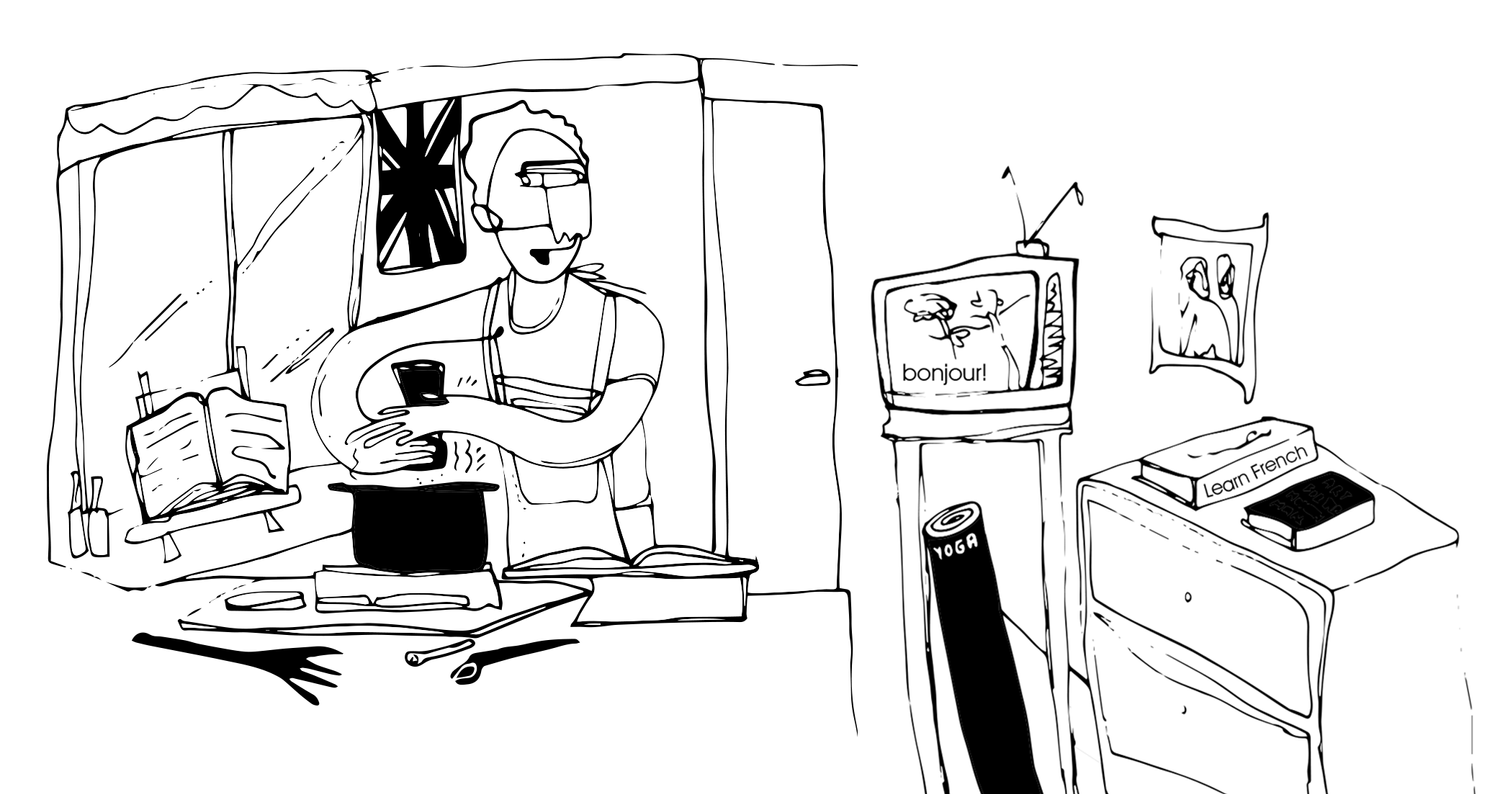
2. Learn to cook a new dish. Experiment with unusual combinations. Channel your inner Heston Blumenthal.
3. Watch a foreign film or TV show. Observe what is different or unusual about it compared to the shows you ordinarily watch.
4. Try meditation. It helps to cut out the noise and refine your thinking.
5. Travel to a country where you don’t speak the language. Observe the way things work. How do people interact?
6. Read a book on a topic you wouldn’t normally read about. The most creative ideas come from combining disparate concepts.
If you’re looking for more ways to be more creative, why not sign up for our How To Be More Creative course featuring some of the world’s top experts and certified by Cannes Lions.
Enjoyed this? There's more.
Weekend Reads every Friday, Weekday Wisdom every Tuesday.Plus 10% off your next purchase, right away.
Join 17,489+ curious people. Unsubscribe any time.
Comments
No comments yet. Start the conversation.