3 Types of Brand Purpose: According to Tom Roach
Not sure what a brand purpose is? Take a look at the 3 types set out by Tom Roach.

“The brands that will thrive in the coming years are the ones that have a purpose beyond profit.”
Having a specific purpose for your brand is a hot 🔥 topic in 2020.
Amidst a global pandemic and several human rights issues at the fore of our collective consciousness, how much of your brand you want to devote to purpose over profit is an important thing to consider.
For example, the UK shoe repair chain Timpsons - (even though they don’t explicitly state that it is their purpose) do some great work employing ex-convicts despite that having nothing to do with their business. The purpose doesn’t need to relate to the profit, but the reputation of your company as a good employer can drive sales through positive word of mouth.
Speaking of Timpsons brings us to the first of Tom Roach’s brand purpose types: the Born Purposeful.
“No one ever seems to argue about brands like this – very clear purposes, and business models designed to balance purpose and profit.”
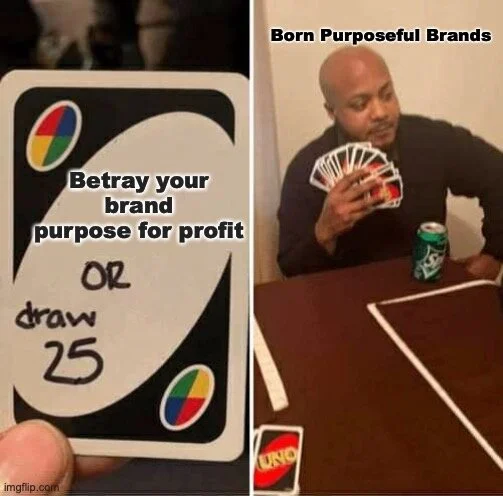
Think Ben & Jerry’s, Patagonia - brands that have the ethos of making the world a better place at the centre of their identity. 🌍
From their outset, they’ll have been formed with a ‘societal purpose’ that imbues everything they do.
Instead of being tacked on as an afterthought, the brands born purposeful will often have their purpose be synonymous with their public face.
The next level of brand purpose is Corporate Converts. 💼
Generally larger-scale than the brands born into purpose, corporate converts will have a change of heart and attempt to become a better ‘corporate citizen’. This could be to repent for past company wrongdoings, or because they just want to make difference.
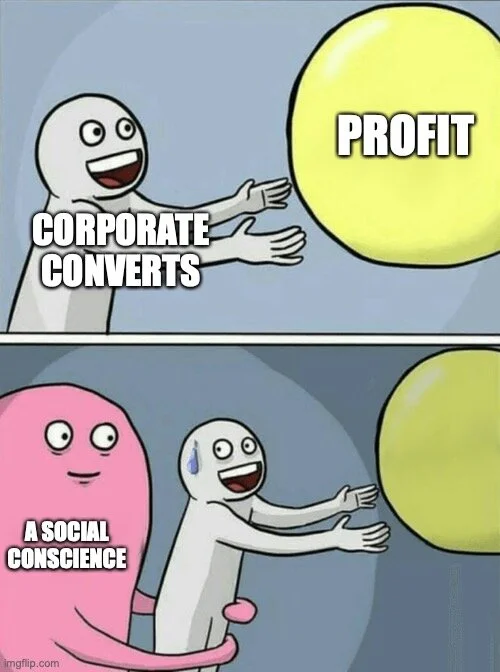
Though a bit late to the game, the intention is there. Because they weren’t purpose-built, often their business model can conflict with taking one on later in their corporate journey.
It also means that, because their purpose was initially to maximise profit, there will be varying degrees of internal support to the new direction.
Not everyone will be on board. Change is hard, especially when it affects the bottom line.
So, there are more struggles in converting to a purpose instead of setting out with one in mind. The balance between purpose and profit won’t always be weighed the way that’s morally preferable. ⚖️
Corporate Conversion isn’t black and white - it’s much more grey.
“Brand purpose is your brand’s superpower.”
The 3rd and final type is Pseudo-Purposeful.
Think bandwagon.
This type is the brands whose purpose is whatever topic is ‘trending with their demographic’. Be it gender politics or the complexities of racism, these brands can scramble up something to show they care. 🙏
But once it falls out of the public eye, onto the next topic.
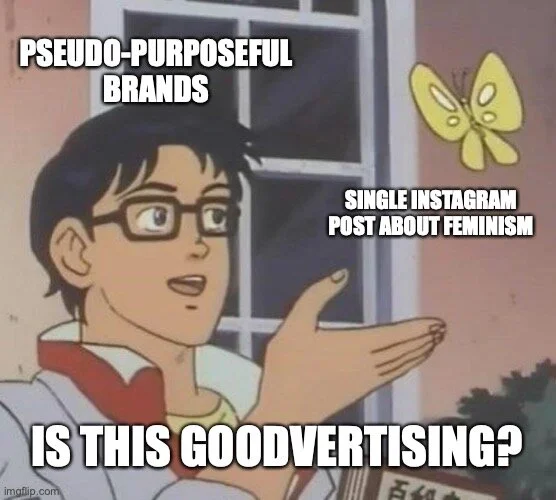
There is a lack of permanence to this style.
Performative activism and a purpose-of-the-week ethos won’t create brand loyalty when nothing seems to stick for long enough to make any difference.
Will this make the company less successful or reduce profit? Maybe.
It’s all about authenticity.
Progressive business models are a longer-term investment. With people increasingly wanting to feel some brownie points when they spend their money, there will probably only be more demand for brands to make their purposes clear.
But, if your sole way of making it clear is through adverts showing how great you are…it might be time to rethink what your real purpose is.
(The information in this post was taken from Brand purpose. The biggest lie the ad industry ever told? by Tom Roach.)
If you’re interested in learning more about the world of brand purpose and it’s place within Goodvertising, you can pre-register for our upcoming Goodvertising course below!
Enjoyed this? There's more.
Weekend Reads every Friday, Weekday Wisdom every Tuesday.Plus 10% off your next purchase, right away.
Join 17,489+ curious people. Unsubscribe any time.
Comments
No comments yet. Start the conversation.