The horse that could count
A 19th Century German maths teacher taught his horse to count. Or did he?
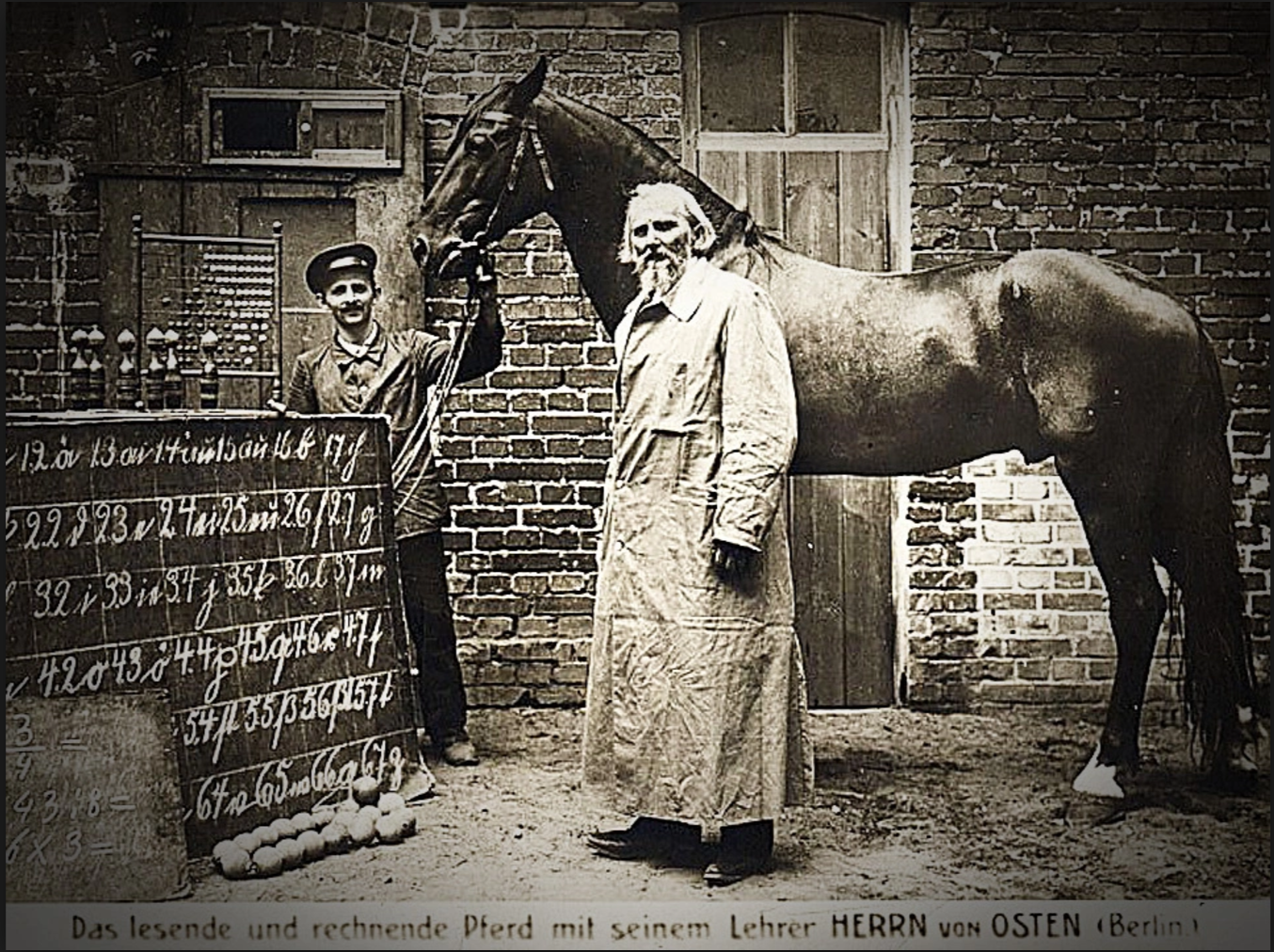
In the late 1800s, a German maths teacher called Wilhelm Von Osten was convinced that animals had a higher degree of intelligence than people appreciated.
He trained his horse, Hans, to do simple calculations and began a popular tour demonstrating to crowds how clever Hans was.
Wilhelm and his trusty steed were subjected to a great degree of scientific scrutiny at the time, but nobody could discredit their unusual talent.
This was until the questioners were asked to stand further back and ask from a distance.
At this point, it was found that Hans was actually responding to very subtle cues in the questioner’s body language to know which answer to give.
The questioners were blissfully unaware that they were giving the answers away.
The ‘Clever Hans Effect’ and the idea of misattribution of the causality, has been a big driving force within the social sciences to carry out proper experiments that fairly test an intervention’s efficacy.
For more great stories like these and to learn about the social science behind them check out our course on Behavioural Economics.
Enjoyed this? There's more.
Weekend Reads every Friday, Weekday Wisdom every Tuesday.Plus 10% off your next purchase, right away.
Join 17,489+ curious people. Unsubscribe any time.
Comments
No comments yet. Start the conversation.