The blue butterfly that isn't really blue
How structural colour in the animal kingdom offers clues to a paint-free future.
“
Nature’s message was always there and for us to see. It was written on the wings of butterflies.
”
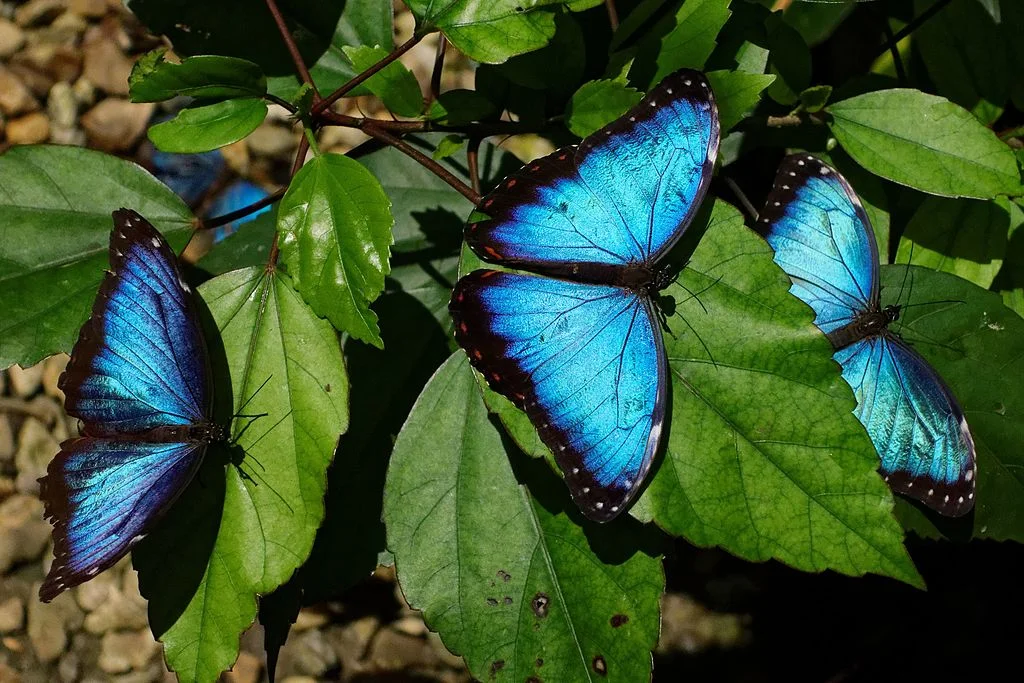
Behold the blue morpho butterfly.
Hailing from the Amazon forest, it is remarkable for its size (with a wing span of up to 20 centimetres) and its eye-catching colour.
Its blue is so bright it looks like someone has enhanced it in Photoshop.
But guess what?
Its wings aren’t blue; they’re brown.
No, this isn’t some viral internet optical dress illusion; it’s just nature showing off.
Viewed under a microscope, its wings are made of nanoscale structures resembling Christmas trees.
Their formation reflects the light, making them appear a brilliant blue. These structures expand as they warm in the sun, and the blue becomes richer.
You can see the structures with increasing magnification in this video.
It’s colour without pigment.
You see, pigment is expensive and gets affected by its chemical environment. Structural colour, by comparison, doesn’t fade like pigments.
This phenomenon inspired the research team at Lexus in Japan. They wondered if a similar technique could be used to colour their cars.
In collaboration with material scientists and a specialist paint company, they figured out how a similar iridescent effect could be applied to vehicle paint.
The result was the Lexus LC Structural Blue Edition.
Offered in limited numbers, the car has a mesmerising paint finish that appears blue yet doesn’t contain any blue pigment.
Lexus claims that while standard automotive blue paint reflects less than 50 per cent of incoming light as blue, Structural Blue reflects almost 100 per cent.
Structural colour could have many applications beyond automotive paint.
Consider the fashion industry as one example. It receives justifiable criticism for the toxic dyes used to colour clothing. Structural colour could offer a sustainable alternative.
Other companies already looking into this technology are Seprify (formerly Impossible Materials), Sparxell, BASF, and Cypris Materials, to name a few.
Structural colour is only the beginning of nature’s marvellous ways with colour.
If you want to be even more amazed, check out this article.
Across nature, there are different ways that structural colour has evolved. In this case, it’s where from doesn’t always follow evolutionary function.
Do some exploring the next time you see a buttercup, beetle, or bird with very bright colours.
A reflection of yellow from a buttercup on the underside of your chin won’t just tell you if you like butter but will reveal more secrets beyond what we can see!
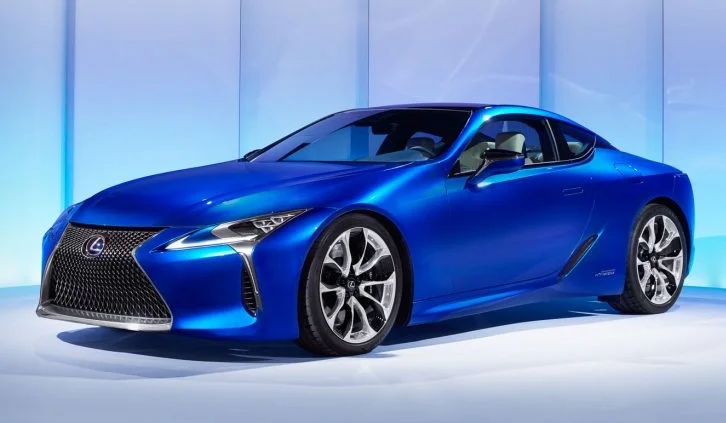
The Lexus LC Structural Blue Edition
If you found this post interesting, you will enjoy our upcoming Biomimicry course, which dives deeper into the study of how nature can help us innovate.
Find out how Velcro, barbed wire and many other popular products used nature’s secrets in their design.
Enjoyed this? There's more.
Weekend Reads every Friday, Weekday Wisdom every Tuesday.Plus 10% off your next purchase, right away.
Join 17,489+ curious people. Unsubscribe any time.
Comments
No comments yet. Start the conversation.