Storyboarding
A tried and tested technique invented by Disney in the 1930s.
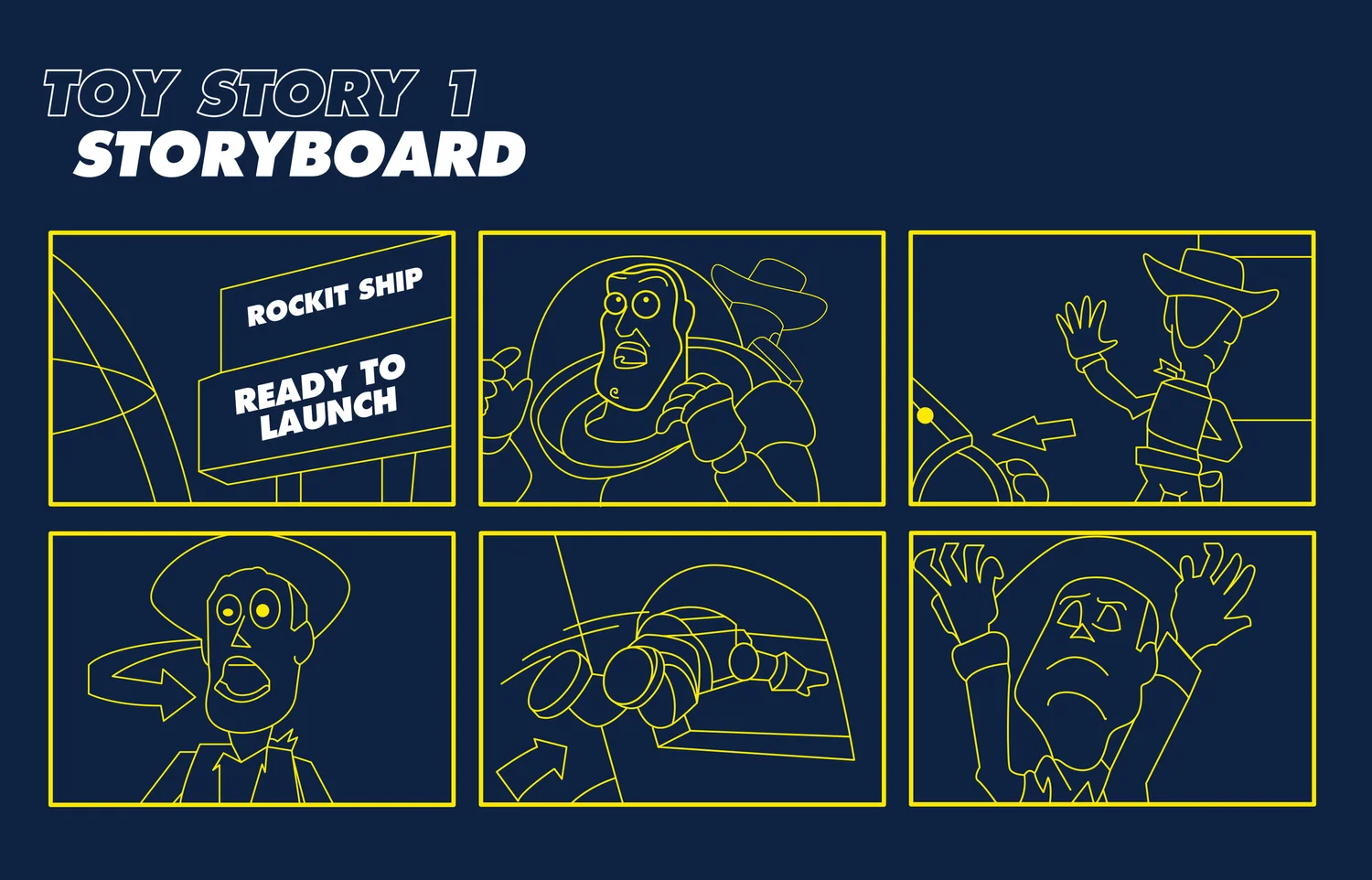
Webb Smith worked as a writer in the animation department of Disney Studios. He is known for his work on the films Snow White and the Seven Dwarfs (1937), Pinocchio (1940) and Dumbo (1941).
What is less well known is that he was credited by Walt Disney himself with making one of the greatest technical breakthroughs in the history of animation: the storyboard.
It may sound odd but before the invention of this device, the plot was described with words before the animator began drawing out each scene.
The problem with this approach was that it allowed very little margin for error because it relied on everyone ‘visualising’ the words in the same way.
This reliance on accurate interpretation of the scene descriptions coupled with the fact that each frame was hand drawn made early animation a time consuming and therefore expensive process.
One day whilst working away in his studio, Webb had the idea of drawing individual scenes on separate sheets of paper and fixing them to a bulletin board.
This novel approach allowed him to ‘sketch’ out the story in a rougher, less finished form and rearrange elements to improve the flow of the narrative.
You can apply this same technique to your own stories regardless of their format.
All you need is a wall and some post-it notes and you’re ready to go.
Remember don’t strive for perfection. Keep it loose and rough.
The purpose is for you to be able to see the ‘bigger picture’ and how all the pieces of your story fit together.
If your story carries sound you can apply a ‘scratch’ audio and voice over track over the top before you have to commit to doing it properly.
In short, to help better tell your story it's a good idea to storyboard it first.
Enjoyed this? There's more.
Weekend Reads every Friday, Weekday Wisdom every Tuesday.Plus 10% off your next purchase, right away.
Join 17,489+ curious people. Unsubscribe any time.
Comments
No comments yet. Start the conversation.